⚠️ Safety Alert / Avviso di Sicurezza
🇬🇧/🇺🇸 It is recommended to climb only on routes with bolting marked 316L or A4. Other routes should not be considered safe.
🇮🇹 Si consiglia di scalare solo sulle vie con chiodatura riportante la dicitura 316L o A4. Le altre vie sono da considerarsi non sicure.
• Atlantide bassa: 🚶♂️ 15' - ⛰️ 200 MSL - 🧭 SW - ☀️ from late morning onwards
• Garimpo: 🚶♂️ 10' - ⛰️ 180 MSL - 🧭 SW - ☀️ from late morning onwards
• Parete centrale: 🚶♂️ 8' - ⛰️ 270 MSL - 🧭 SW - ☀️ from late morning onwards
• Cava degli anelli: 🚶♂️ 12' - ⛰️ 250 MSL - 🧭 S - ☀️ from late morning onwards
• Parete delle meraviglie: 🚶♂️ 20' - ⛰️ 210 MSL - 🧭 W - ☀️ from late morning onwards
• Poveriera: 🚶♂️ 20' - ⛰️ 210 MSL - 🧭 S - ☀️ from late morning onwards
• Polveriera: 🚶♂️ 20' - ⛰️ 210 MSL - 🧭 SE - ☀️ during the morning
• Parete dimenticata: 🚶♂️ 15' - ⛰️ 270 MSL - 🧭 SE - ☀️ morning and late afternoon
• Pilastro del forte: 🚶♂️ 13' - ⛰️ 290 MSL - 🧭 N/S/W - ☀️ according to the face it could be sunny or shady
• Cajenna: 🚶♂️ 15' - ⛰️ 280 MSL - 🧭 SW - ☀️ from late morning onwards
🇬🇧/🇺🇸
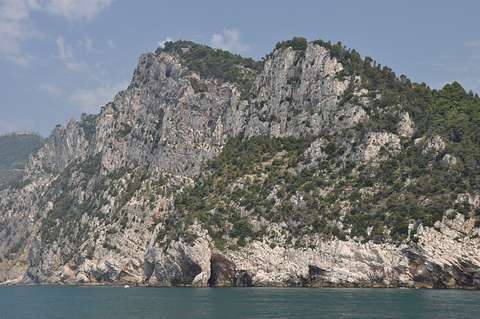
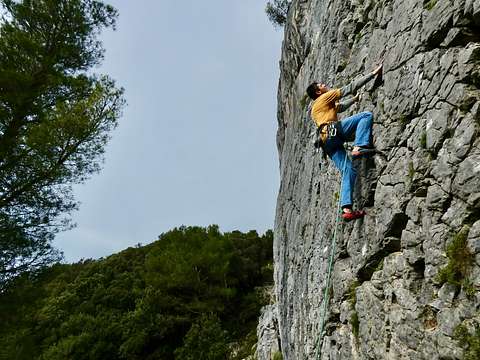
Muzzerone is one of Italy’s most iconic and historic crags, located just a stone's throw from the city of La Spezia. What makes this place truly world-class is its breathtaking position: the limestone walls rise directly above the Tyrrhenian Sea, offering a climbing experience where the horizon seems to merge with the rock. Whether you are climbing technical slabs or athletic overhangs, the views—and the photos—are guaranteed to be incredible.
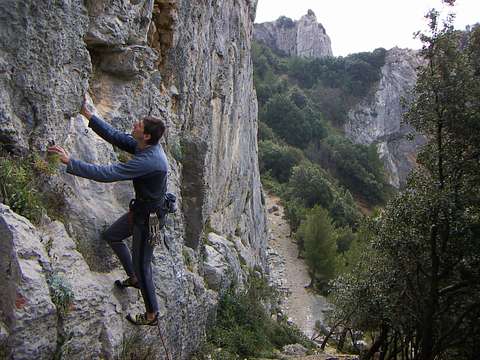
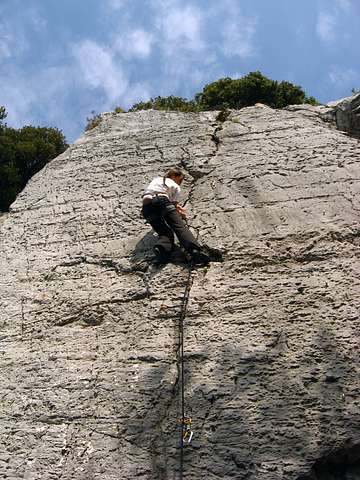
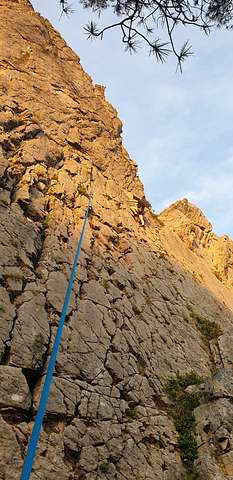
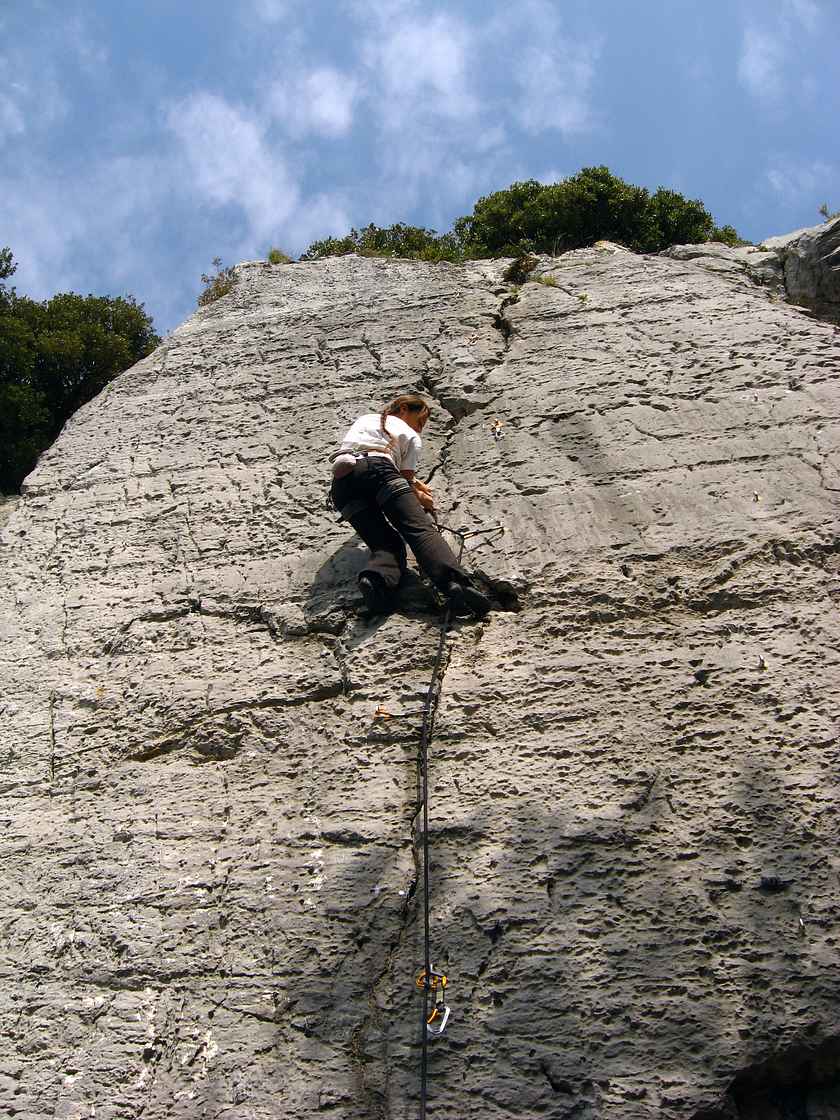
The crag features almost 300 routes ranging from 4 to 8a. The style is predominantly technical, characterized by gray limestone walls full of sharp cracks and precision footwork. However, for those seeking more physical challenges, the Polveriera sector offers athletic lines on orange rock with beautiful tufas.
The area is divided into several distinct sectors:
• Atlantide Bassa: One of the crown jewels of Muzzerone. It features two distinct profiles: a technical gray wall with difficulties between 6c and 7b (where helmets are highly recommended) and a much steeper section with challenging lines up to 8a. While the bolts are high quality, they can be quite spaced. This area is sheltered from the wind and retains heat, making it an ideal choice for winter climbing.
• Garimpo: A wild, peaceful location with 12 routes ranging from 5c to 8a. Due to the high technical demand and finger strength required, it is rarely crowded. Note: The access and base are not suitable for children; the final meters of the fixed rope are slightly overhanging. Furthermore, reaching the last four lines from the route "Pasta e basta" requires crossing a fairly exposed traverse on a fixed rope.
• Parete Centrale: The most famous and historic face. It is very easy to reach and highly recommended for families and children due to the sheer volume of routes across all grades. While some lines have become polished over time, it remains a fantastic winter destination. The slabs dry almost immediately after rain.
• Cava degli Anelli: A small, newer sector found on the path toward Parete delle Meraviglie. It offers short lines equipped with modern glue-in bolts.
• Miss: Located just past Cava degli Anelli, this slightly overhanging wall stays in the shade and features powerful starts. It is one of the few spots where climbing is enjoyable even in summer. Use caution on some of the older routes.
• Parete delle Meraviglie: The second most popular wall in the area, beloved for its beautiful routes in the 5th and 6th grade range. The setting is quiet and comfortable, offering several short multi-pitch options.
• Poveriera: Situated to the right of Parete delle Meraviglie, this sector boasts top-quality rock and serves as a perfect hub for climbers comfortable in the 6a/6b range.
• Polveriera: The go-to spot for athletic climbing on orange rock and tufas. Recently re-bolted, this overhanging sector is best enjoyed during the winter months.
• Parete Dimenticata: Located at the base of Pilastro del Forte, this sector offers fingery, overhanging lines and is arguably the most photogenic spot in the area.
• Pilastro del Forte: This pillar features two distinct faces. The North face is a slab with reasonably good equipment, while the other face has a more "alpinistic" character, featuring short two-pitch lines. Careful attention should be paid to the state of the bolts here.
• Cajenna: Set within a stunning natural amphitheater, this sector offers a comfortable ledge protected from the wind. While the approach is not child-friendly, all routes have been recently re-bolted for safety.
While Muzzerone is a historic site with some aged equipment, the majority of the routes have been recently re-bolted to modern safety standards. However, pay attention in sectors like Atlantide Bassa (spaced bolts) or Pilastro del Forte, where a more cautious approach is advised. The best season is generally winter, as many sectors are sun-drenched and protected from the wind. For summer climbing, the shaded Miss Sector is the place to be.
Most sectors offer comfortable staging areas at the base, though the access paths are not always suitable for children.
Rest days & nearby
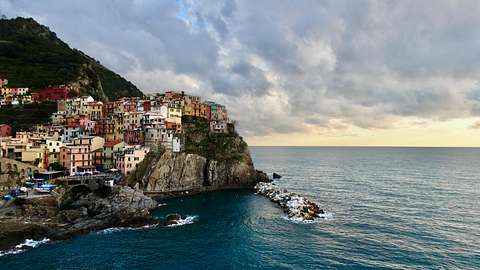
Muzzerone is located in the heart of the Golfo dei Poeti, a region beloved by writers and poets for centuries. You are right at the gateway to the Cinque Terre (Riomaggiore, Manarola, Corniglia, Vernazza, and Monterosso).
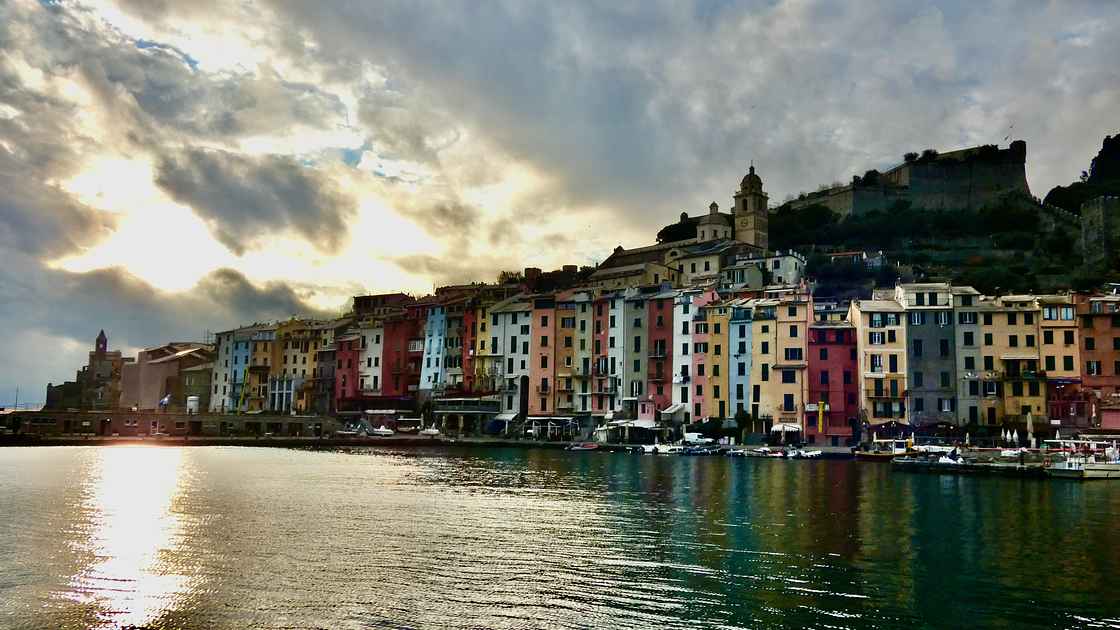
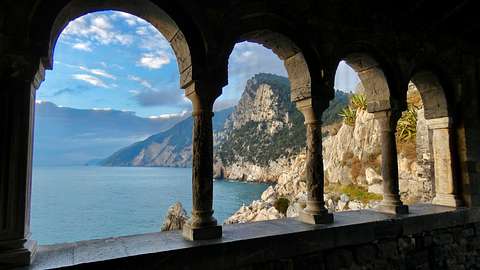
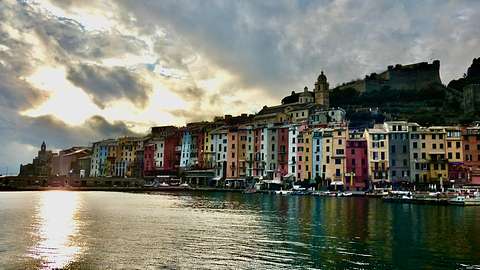
Portovenere: Visit this stunning UNESCO World Heritage village with its colorful houses and the iconic Church of San Pietro.
Nature & Culture: Explore the thick pine forests, the romantic shores, and the steep cliffs of the Ligurian Riviera.
Gastronomy: Don't miss the local seafood, pesto, and Sciacchetrà wine in the picturesque villages perched on the rocks.
🇮🇹
Il Muzzerone è una delle falesie più iconiche e storiche d’Italia, situata a due passi da La Spezia. Ciò che rende questo posto una destinazione di classe mondiale è la sua posizione mozzafiato: le pareti di calcare svettano direttamente sul Mar Tirreno, offrendo un’esperienza di arrampicata dove l’orizzonte sembra fondersi con la roccia. Che tu stia scalando su placche tecniche o strapiombi atletici, il panorama — e le foto — saranno garantiti.
La falesia conta quasi 300 tiri con gradi che vanno dal 4 all'8a. Lo stile è prevalentemente tecnico, caratterizzato da muri di calcare grigio pieni di fessure nette e passaggi che richiedono un uso dei piedi chirurgico. Tuttavia, per chi cerca sfide più fisiche, il settore Polveriera offre linee atletiche su roccia arancione con splendide canne.
L'area è divisa in diversi settori:
Atlantide Bassa: Uno dei fiori all’occhiello del Muzzerone. Presenta due profili distinti: un muro grigio tecnico con difficoltà tra il 6c e il 7b (casco caldamente consigliato) e una sezione molto più strapiombante con linee dure fino all'8a. Anche se le protezioni sono di ottima qualità, la chiodatura può risultare piuttosto lunga. È un settore riparato dal vento e si scalda molto, ideale per scalare in inverno.
Garimpo: Un posto selvaggio e tranquillo con 12 tiri dal 5c all'8a. Data l’elevata tecnicità e la forza di dita richiesta, è raramente affollato. Nota: l’accesso e la base non sono adatti ai bambini; gli ultimi metri della corda fissa sono leggermente strapiombanti. Inoltre, per raggiungere le ultime quattro linee dalla via "Pasta e basta", è necessario percorrere un traverso piuttosto esposto su corda fissa.
Parete Centrale: La parete più famosa e storica. È facilissima da raggiungere e molto consigliata per famiglie e bambini grazie all'alto numero di vie su tutte le difficoltà. Anche se alcune linee sono diventate unte col tempo, rimane una fantastica meta invernale. Le placche asciugano quasi subito dopo la pioggia.
Cava degli Anelli: Un piccolo settore più recente che si incontra lungo il sentiero verso la Parete delle Meraviglie. Offre tiri brevi attrezzati con moderni fittoni resinati.
Miss: Situato appena dopo la Cava degli Anelli, questo muro leggermente strapiombante rimane all’ombra e presenta partenze fisiche. È uno dei pochi spot dove si scala bene anche in estate. Presta attenzione su alcune delle vie più vecchie.
Parete delle Meraviglie: La seconda parete più frequentata della zona, amata per le sue bellissime vie di 5° e 6° grado. L’ambiente è tranquillo e comodo, con diverse opzioni per vie lunghe (multipitch) brevi.
Poveriera: Situata a destra della Parete delle Meraviglie, vanta una roccia di ottima qualità ed è il settore perfetto per chi si muove sul 6a/6b.
Polveriera: Il regno della scalata atletica su roccia arancione e canne. Recentemente richiodato, questo settore strapiombante dà il meglio di sé nei mesi invernali.
Parete Dimenticata: Alla base del Pilastro del Forte, offre linee di dita in leggero strapiombo ed è probabilmente il punto più fotogenico di tutta l’area.
Pilastro del Forte: Questo pilastro ha due facce distinte. La Nord è una placca con chiodatura discreta, mentre l’altra faccia ha un carattere più "alpinistico", con brevi vie di due tiri. Bisogna prestare molta attenzione allo stato degli spit qui.
Cajenna: Incastonato in uno splendido anfiteatro naturale, offre una cengia comoda e protetta dal vento. Anche se l’avvicinamento non è a prova di bambino, tutte le vie sono state recentemente richiodate.
Nonostante il Muzzerone sia un sito storico con alcune protezioni datate, la maggior parte delle vie è stata adeguata ai moderni standard di sicurezza. Tuttavia, occhio in settori come Atlantide Bassa (spit lunghi) o Pilastro del Forte, dove è richiesto un approccio più prudente. La stagione migliore è generalmente l'inverno, dato che molti settori sono in pieno sole e protetti dal vento. Per scalare in estate, il settore Miss (all'ombra) è il posto giusto. Quasi tutti i settori offrono basi comode per fare sicura, anche se i sentieri di accesso non sono sempre agevoli per i più piccoli.
Rest days & dintorni
Il Muzzerone si trova nel cuore del Golfo dei Poeti, una terra amata da scrittori e poeti per secoli. Sei proprio alle porte delle Cinque Terre (Riomaggiore, Manarola, Corniglia, Vernazza e Monterosso).
Portovenere: Visita questo splendido borgo patrimonio UNESCO, con le sue case colorate e l'iconica Chiesa di San Pietro a picco sul mare.
Natura e Cultura: Esplora le fitte pinete, le rive romantiche e le scogliere scoscese della Riviera Ligure.
Gastronomia: Non perderti il pesce locale, il vero pesto e il vino Sciacchetrà nei pittoreschi villaggi arroccati sulla roccia.