☀️SUN DURING THE DAY:
• Mainly all day long, but shady in the afternoon
🧭 EXPOSURE:
• South East
💧WATER SOURCE:
• YES at Agriturismo La Cerra
🧱ROCK TYPE:
• Rough Granite
📆 BEST PERIOD:
• All Year Around
👪 FAMILY FRIENDLY:
• No
📱PHONE SIGNAL:
• Yes
🇬🇧
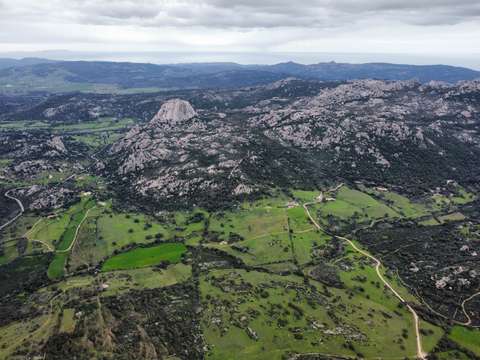
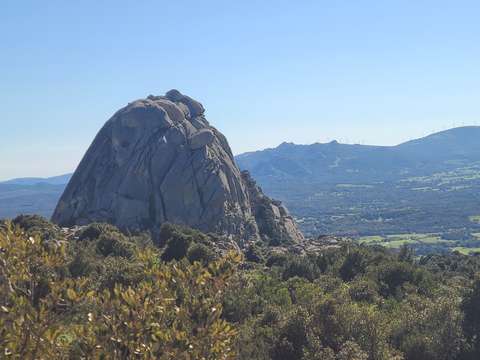
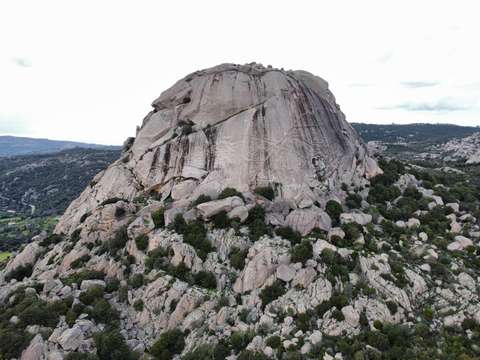
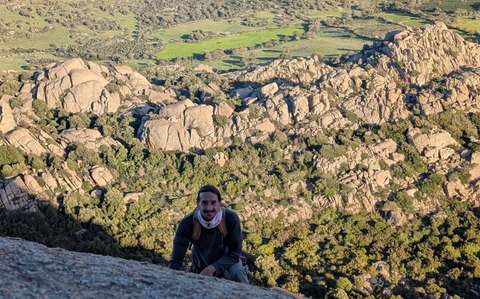
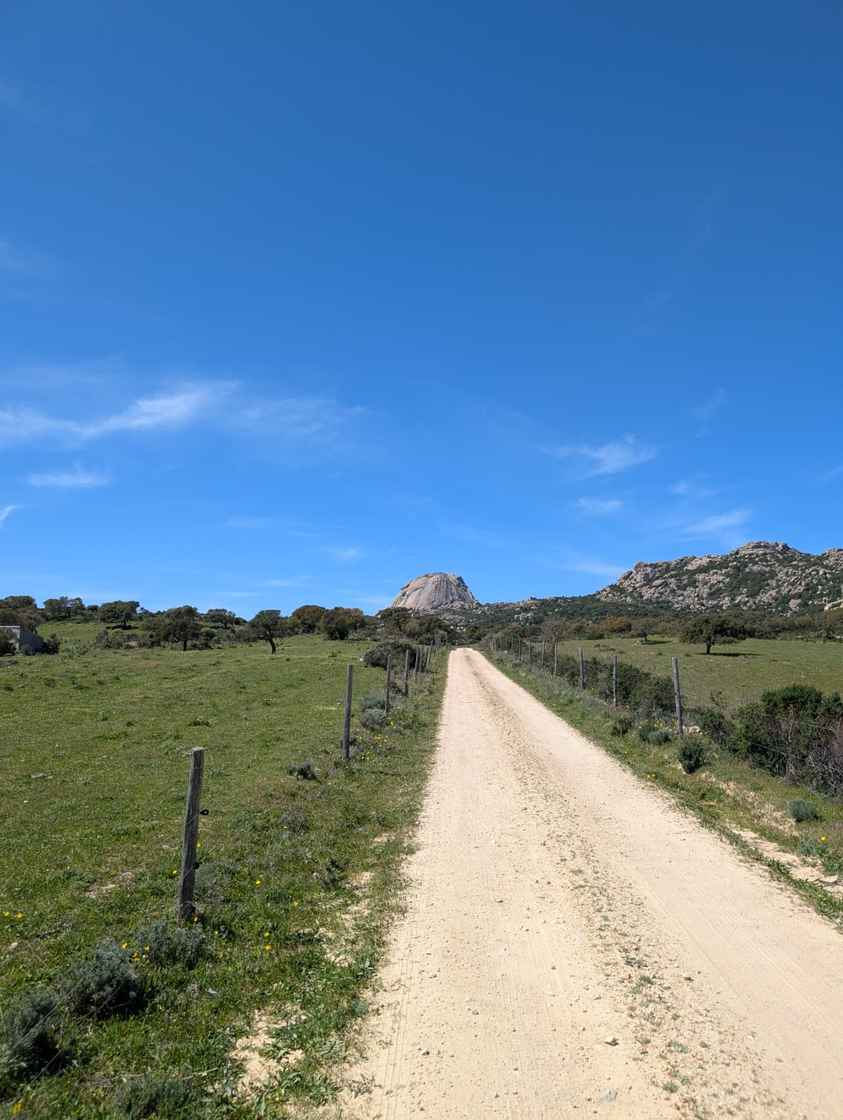
⛰️Surely one of the largest granite monoliths in Europe, this formation stands as an extraordinary landmark in the heart of Gallura. Its appearance is truly breathtaking, rising from the landscape with a scale and elegance that are difficult to describe. It is arguably one of the finest pieces of rock in Italy.
The climbing is predominantly slab climbing at its purest: there are virtually no holds to pull on, and progression relies almost entirely on friction, balance, and trust in your feet. It is climbing based on movement and sensation rather than strength.
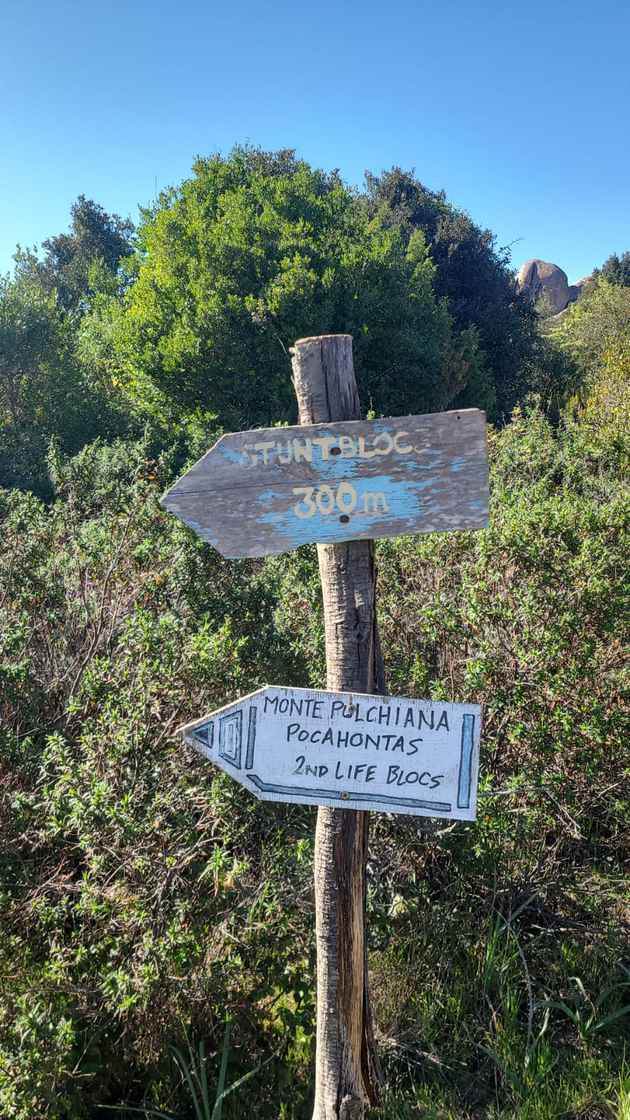
Among all the routes, Pocahontas is unquestionably the standout line. Nothing else on the wall comes close to matching the beauty of this remarkable quartz vein, which cuts across the face for roughly 75 meters, creating one of the most aesthetic and memorable climbs in the region.
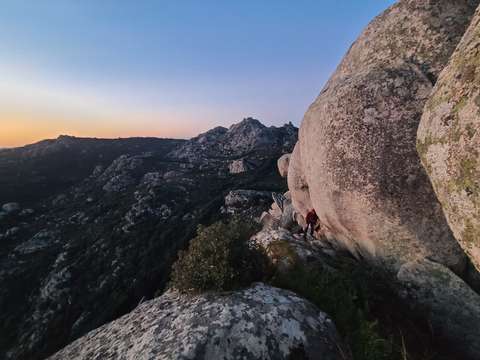
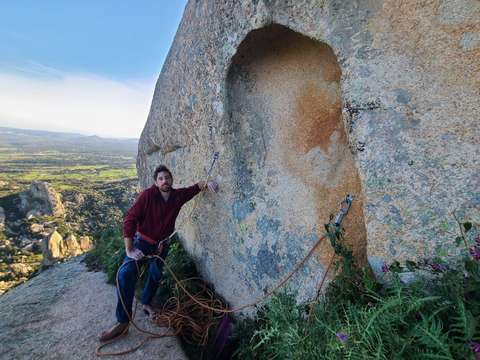
The descent can be made by abseiling with 60-meter ropes, or by following a trail on the opposite side of the formation. The latter can be quite difficult to locate and should not be underestimated.
The wall receives sun for most of the day, with shade arriving only in the late afternoon. For this reason, the route can still be a good option during summer if climbed later in the day.
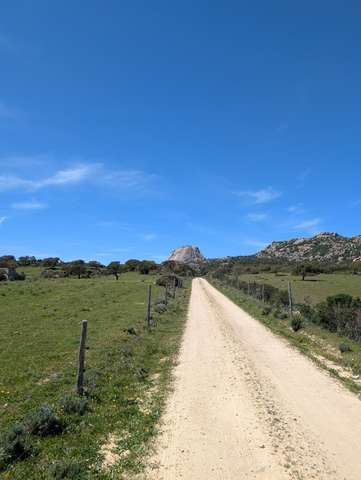
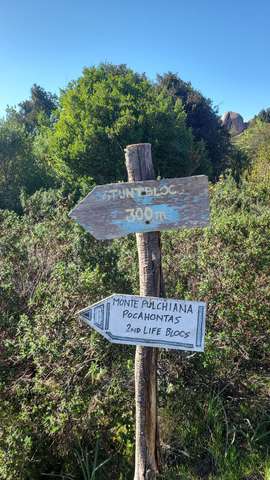
The approach is somewhat challenging. It leads through a dense holm oak forest scattered with large granite boulders, where GPS tracks are often unreliable and imprecise. It is therefore advisable to study photos of the wall beforehand and navigate visually toward the base of the route.
The route was completely re-equipped in 2025 with Inox anchors and hardware, resulting in a modern and very well-executed bolt line that remains in excellent condition as of 2026. The neighboring route, L’Arco, is currently much dirtier and less maintained. For this reason, at present, Pocahontas is by far the recommended climb and the one that best showcases the exceptional quality of the formation.
🇮🇹
⛰️Sicuramente uno dei più grandi monoliti di granito d’Europa, una presenza straordinaria nel cuore della Gallura che colpisce immediatamente per imponenza ed eleganza. La sua immagine, che emerge dalla macchia mediterranea, è semplicemente stupefacente e rappresenta probabilmente uno dei più bei pezzi di roccia presenti in Italia.
L’arrampicata è prevalentemente di placca pura: le prese sono quasi inesistenti e la progressione si basa interamente su aderenza, equilibrio e sensibilità nei piedi. È una scalata di grande eleganza, dove contano più le sensazioni e la precisione del movimento che la forza.
Tra tutte le linee presenti, Pocahontas è senza dubbio la più bella. Nulla sulla parete riesce a raggiungere il livello estetico di questa incredibile vena di quarzo che attraversa la placca per circa 75 metri, dando vita a una delle linee più affascinanti e memorabili della Sardegna.
La discesa può essere effettuata in corda doppia con corde da 60 metri oppure seguendo il sentiero sul versante opposto del monolite. Quest’ultima opzione richiede attenzione, poiché la traccia è piuttosto difficile da individuare.
La parete rimane al sole per gran parte della giornata e va in ombra soltanto nel tardo pomeriggio; per questo motivo la via può essere affrontata anche durante l’estate scegliendo le ore più fresche della giornata.
L’avvicinamento non è particolarmente immediato. Ci si addentra infatti in una fitta lecceta disseminata di grandi massi granitici, dove le tracce GPS tendono a essere poco precise a causa della copertura vegetale. Conviene quindi osservare attentamente le fotografie della parete e orientarsi visivamente fino a raggiungere l’attacco della via.
La linea è stata completamente richiodata nel 2025 con materiale inox, con un lavoro eseguito in maniera eccellente che, a oggi, nel 2026, la rende perfettamente sicura e piacevole da percorrere. La vicina via L’Arco, invece, si presenta attualmente più sporca e meno frequentata. Per questo motivo, al momento, è decisamente consigliabile concentrarsi su Pocahontas, che rappresenta l’essenza e la massima espressione dell’arrampicata su questo straordinario monolite.