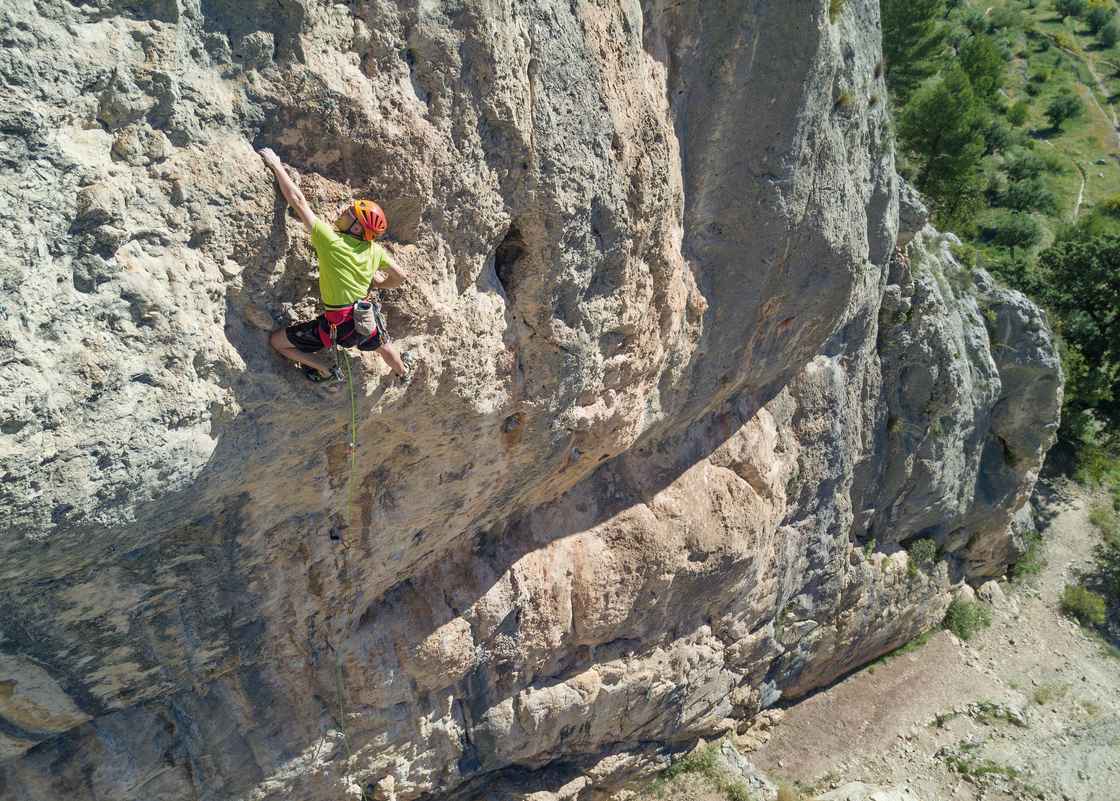
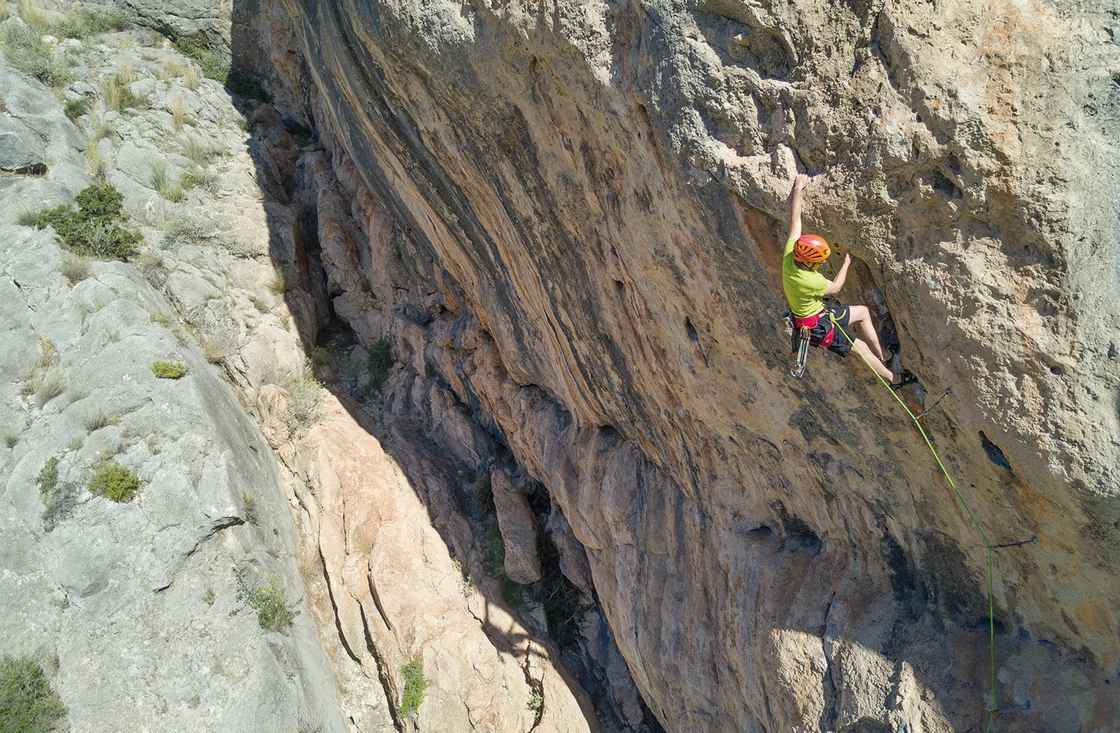
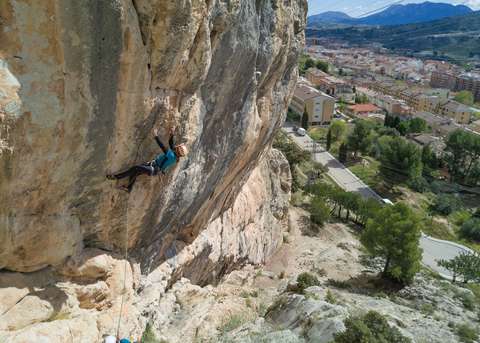
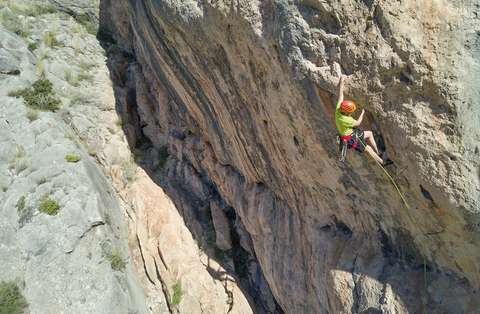
Among its 40 itineraries you will find technical sixth-grade vertical walls and hard seventh- and eighth-grade overhangs which will rarely exceed 20 meters high. Remember that, despite everything, La Uixola is still a crag with a very demanding climbing, so its crimps and pockets are not recommended for beginners or low-level climbers.
Despite not being a great crag regarding its number of routes, it could be stated, without any doubt, that La Uixola, along with Sella, has been the cradle of sport climbing in the province of Alicante. There are two determining factors with a big influence in the history of this mythical place. The first one is the close proximity to the urban core of the city of Alcoy. Being practically integrated within this town, the climbing community of the area was able to daily visit these walls, without waiting for the weekends and without suffering the tedious journeys on the slow roads of that time. Because of this fact, the first routes of the school date back to the early 80s. Antonio Payá "Llargui" was the author of these first openings, from which great classics emerged as Araña, Distrito 10 or Mosca. Shortly after that, Rafael Chazarra and David Vilaplana “Lagarto”, two young talents who would start free climbing all the unresolved projects to that date, would appear on the scene. And then, the second determining factor would take place. The former guard of the San Benet refuge, Toni Jiménez, arrived in Alcoy. This would mark a real turning point, as he brought with him all the philosophy of the incipient “Free Climbing”, of which Montserrat was its clear epicenter. The results were the first seventh-grade route of the school, Gapo de Sapo (currently 7a+/ b), first ascent by Rafael Chazarra. Routes such as Dimitrius Macropoulos and Mejillas tiernas were also bolted, which would respectively represent some of the first 7c+ and 8a routes of the province of Alicante and the Valencian Community. It must be noted that Mejillas tiernas, first ascent by Iván Hernández in the early 90s, could have changed the history of sport climbing in Spain, as Rafael Chazarra was very close to its first ascent in 1986. This would have meant the First eight-grade route in Spain and not the route Otavía, first ascent by Juan Manuel García “Iguana” in Rambla Seca, Dílar. With these events, La Uixola becomes a little famous and is visited by some of the most leading climbers of the moment, such as Miguel Ángel Casals, Martin Scheel, Josep María Alsina or Rafael Comino, among others. In the early 90's the first major re-equipment of the school would come. It was carried out with funds from the city council with a respect of the exposure and the required commitment of the first openings. This fact, together with the emergence of new crags, much more generous in terms of number of bolts, would cause a gradual reduction in the climbing visits to this crag and would eventually result in an almost total abandonment of the area. Finally, in 2010, Alex Mora is in charge of the second great re-equipment of La Uixola, adding more bolts on the routes and re-grading the vast majority of the already existing lines, with the consensus and approval of the entire local climbing collective. This new equipment meant the reactivation of the area and allowed climbers to retest their mythical and demanding routes.