🚶♂️ 15' - ⛰️ 1370 MSL - 🧭 S
☀️All day / Tutto il giorno
🇬🇧/🇺🇸
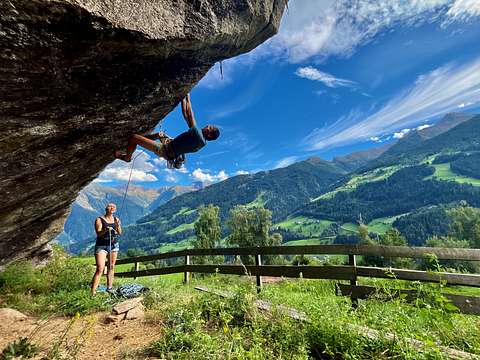
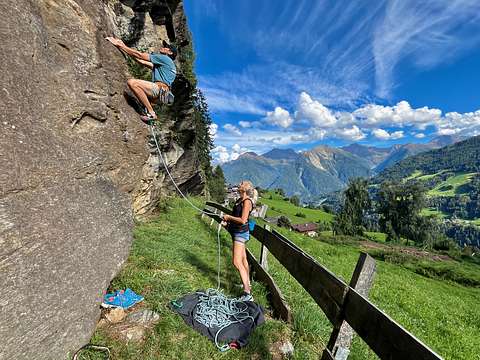
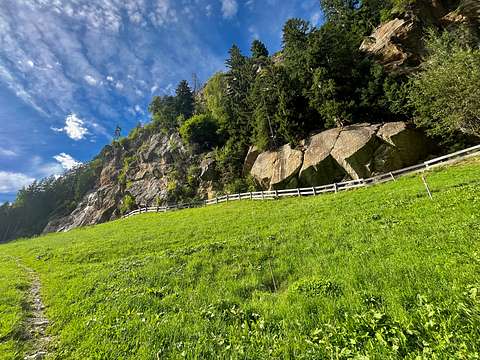
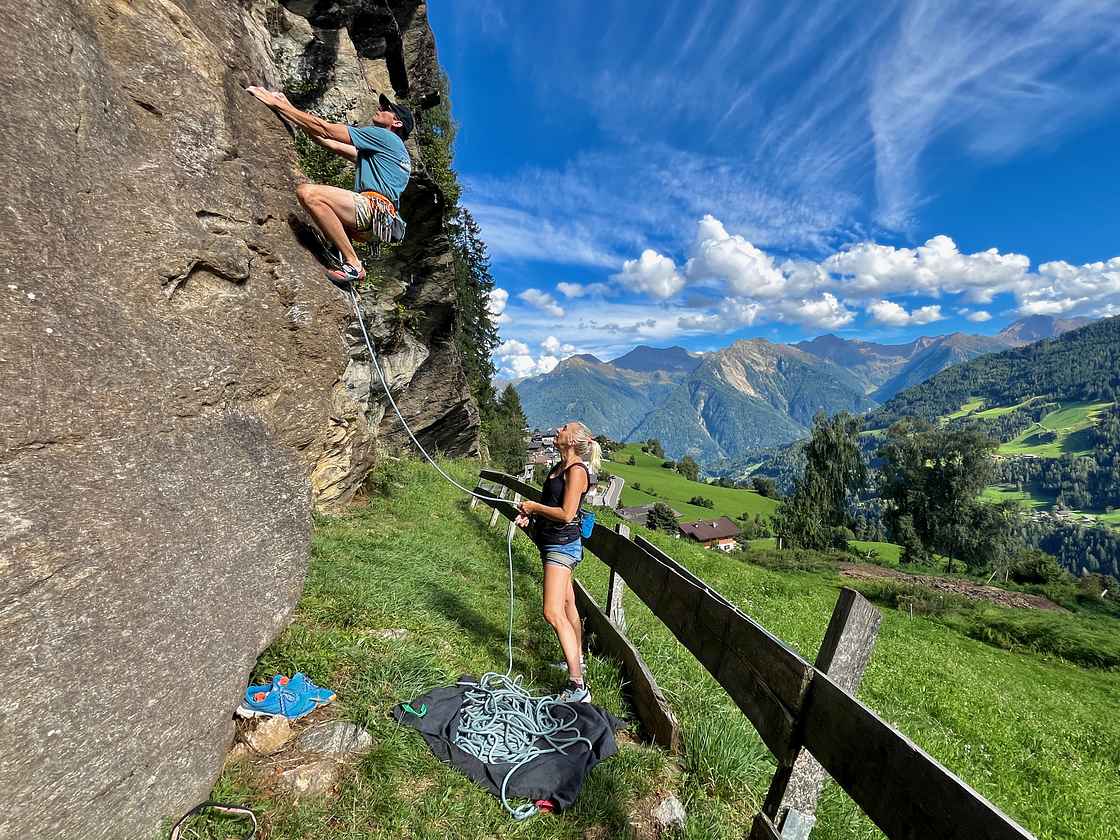
Stulles is a true gem for those seeking a relaxing climbing day in a quintessentially South Tyrolean alpine setting. Surrounded by lush meadows and offering panoramic views of the Passiria Valley, this crag is located at an altitude of approximately 1400m MSL.
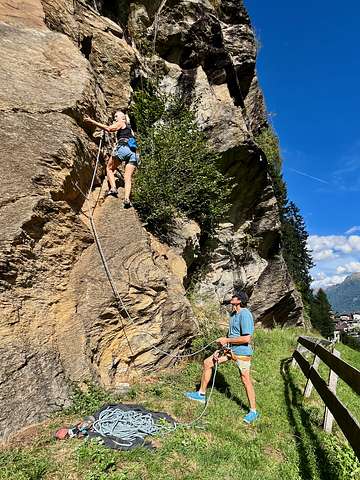
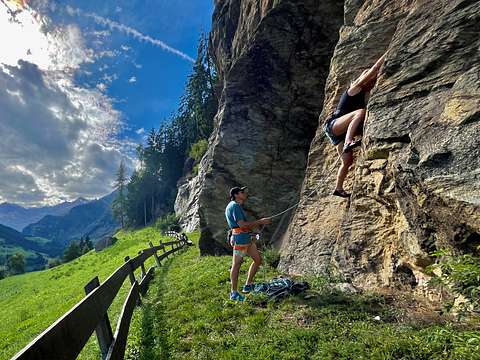
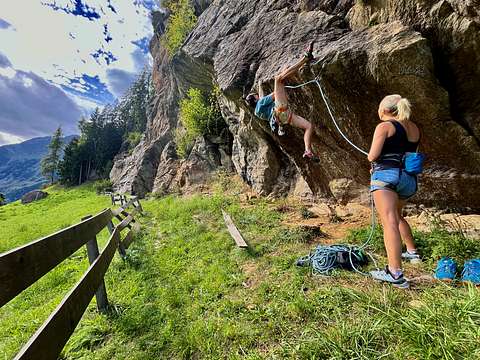
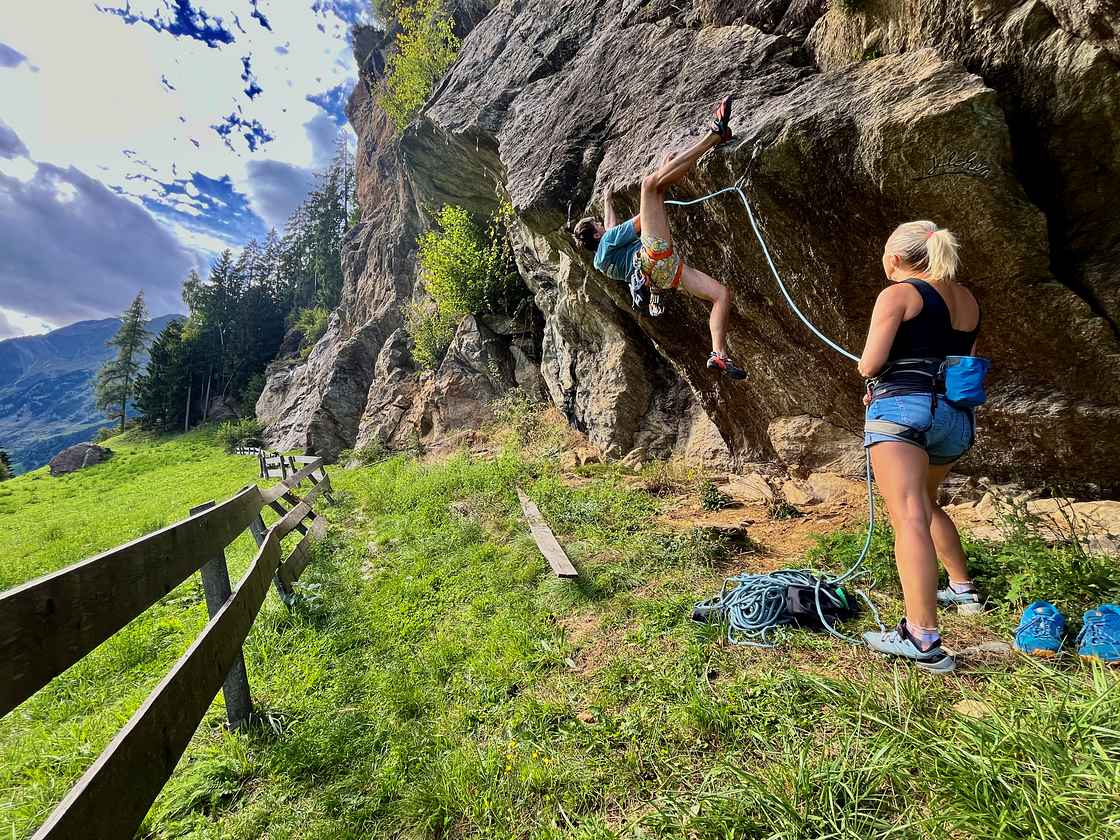
The climbing style is varied and high-quality, characterized by excellent gneiss. You will find everything from technical slabs and vertical walls to athletic overhangs and roofs. The routes offer a mix of crimps, cracks, and some tricky slopers, catering to all styles from delicate footwork to explosive bouldery moves. With over 60 routes ranging from 4 to 8b, there is something for everyone.
The area is divided into three main sectors:
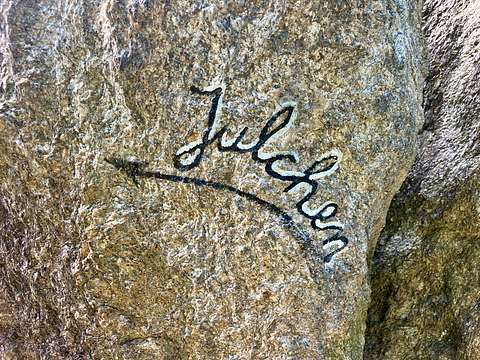
• Sectors A and B: The core of the crag and the most interesting areas. Do not miss classics like Kellekesch, the technical traverse of Julchen, and the aesthetic Tata onsight.
• Sector C: A small sector perfect for fans of short, powerful, and explosive lines.
The bolting is good and the base of the main sector is very family-friendly, even featuring some benches for a comfortable belay. Facing South, the crag enjoys sun all day long. While it might seem like a winter-only spot, the high altitude means that even a single cloud can drop the temperature quickly. The best seasons are spring and autumn, allowing you to climb comfortably in both sun and shade.
Iyour fingers need a break, you are in a prime location. The Stuller Waterfall (one of the highest in Europe) is right nearby and can be visited via a spectacular via ferrata or hiking trails. In nearby Moso, you can explore the Bunker Mooseum, a museum housed in an old WWII bunker dedicated to local history and nature. For food lovers, don't leave the valley without tasting traditional Speck and Canederli (Knödel) in one of the local stuben.
🇮🇹
Stulles è una vera gemma per chi cerca una giornata di arrampicata rilassante in un contesto alpino tipico dell'Alto Adige. Circondata da prati verdi e con una vista panoramica sulla Val Passiria, la falesia si trova a circa 1400 metri di quota.
Lo stile di arrampicata è vario e di alta qualità, su un ottimo gneiss. Troverete placche appoggiate tecniche, muri verticali, ma anche strapiombi e tetti fisici. La roccia offre tacche, fessure e alcuni svasi impegnativi, spaziando da movimenti di piedi delicati a passaggi decisamente boulderosi. Con oltre 60 vie dal 4 all’8b, la falesia offre pane per i denti di ogni climber. I settori principali sono tre:
• Settori A e B: Il cuore della falesia e il più interessante. Da non perdere le bellissime vie Kellekesch, il traverso di Julchen e lo spigolo di Tata onsight.
• Settore C: Un settore dedicato ai boulderisti, con vie corte ed esplosive.
La chiodatura è buona e la base del settore principale è molto comoda, attrezzata con panchine, ideale anche per le famiglie. L'esposizione a Sud garantisce sole per tutto il giorno. Nonostante l’esposizione lo renda un sito potenzialmente invernale, i 1400 metri si fanno sentire: basta una nuvola per rinfrescare l'aria. I periodi migliori sono le mezze stagioni, quando si può scalare piacevolmente sia al sole che all'ombra.
Se avete bisogno di un giorno di riposo, la zona offre molto. Le Cascate di Stulles, tra le più alte d'Europa, sono proprio accanto al paese e visibili dalla strada del Passo Rombo. A Moso potrete visitare il Bunker Mooseum, un museo ricavato in un vecchio bunker che racconta la storia e la natura della zona. Per gli amanti della buona cucina, la Val Passiria è famosa per il suo Speck e i piatti tipici come i Canederli, perfetti per recuperare le energie post-scalata.
🇬🇧/🇺🇸
The development of Stulles reflects the climbing evolution of the Passiria Valley. While the area was known to locals for its hiking potential and the impressive nearby waterfalls, it was the opening of the sport climbing routes that put Stulles on the map. The crag was primarily developed by local climbers and the local section of the AVS (Alpenverein Südtirol), who saw the potential in these sun-drenched gneiss walls. The meticulous cleaning and bolting have transformed what was once just a "steep meadow" above the farm into one of the most popular technical crags in the Merano area.
🇮🇹
Lo sviluppo di Stulles riflette l'evoluzione dell'arrampicata in Val Passiria. Sebbene la zona fosse nota da tempo per le escursioni e le imponenti cascate, è stata l'apertura delle vie sportive a rendere Stulles una meta celebre. La falesia è stata chiodata principalmente da climber locali e dalla sezione dell'AVS (Alpenverein Südtirol), che hanno saputo valorizzare queste pareti di gneiss baciate dal sole. Il meticoloso lavoro di pulizia e chiodatura ha trasformato quello che era solo un ripido prato sopra il maso in uno dei parchi tecnici più apprezzati del meranese.