🚶♂️ 35' - ⛰️ 2100 MSL - 🧭 N / E / S / W
☀️ Mostly sunny, but some faces are shaded during the day / Principalmente soleggiato, ma alcune facce sono in ombra durante la giornata
🇬🇧/🇺🇸
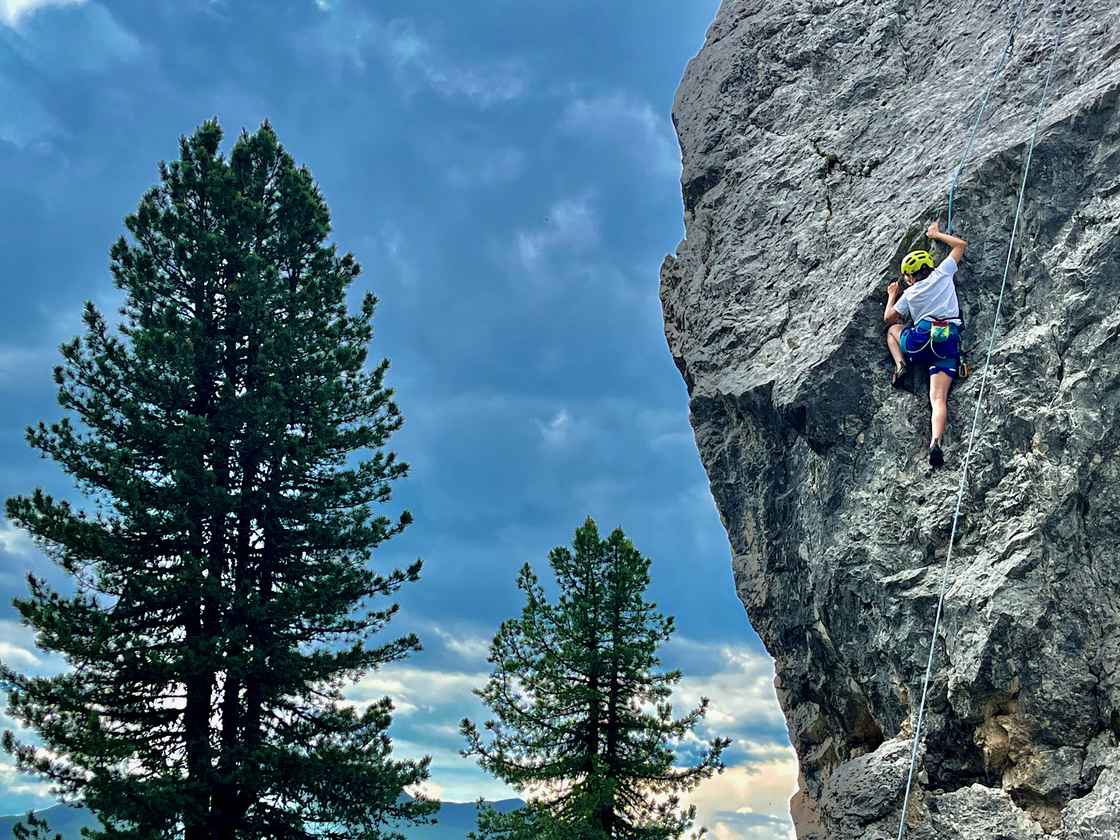
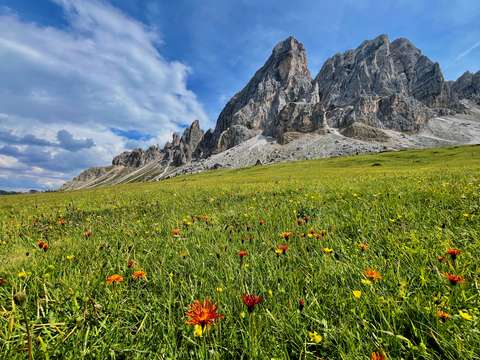
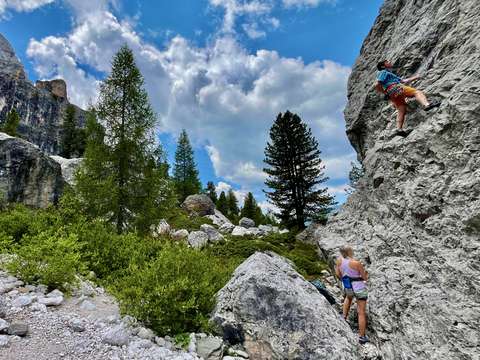
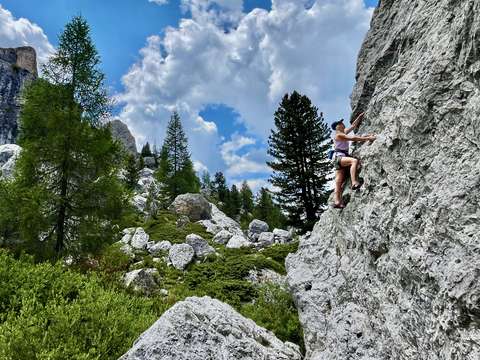
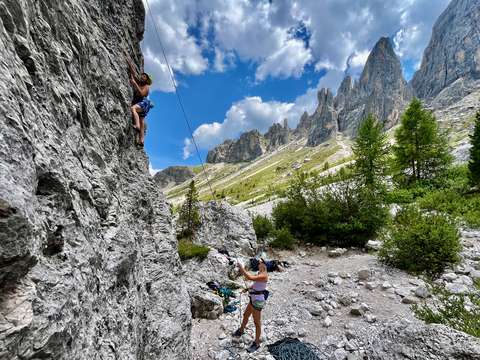
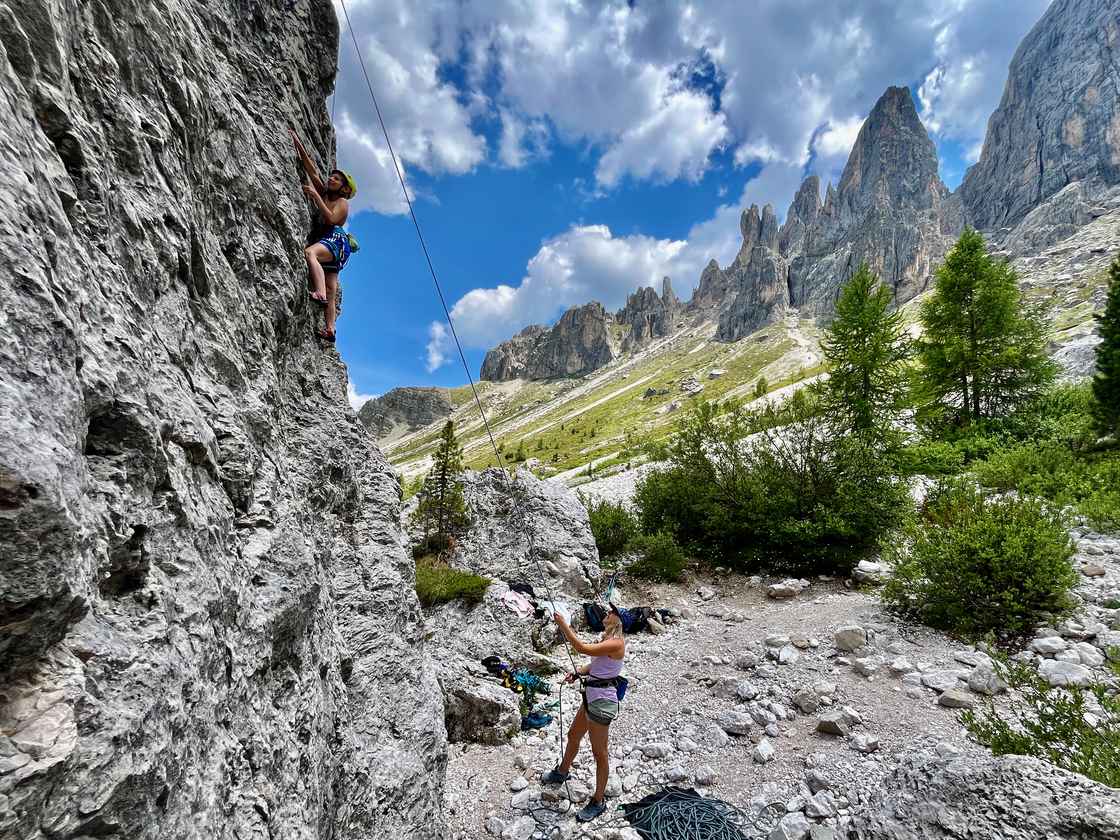
Passo delle Erbe is a unique climbing sector made of massive dolomite blocks that fell from the towering Sass Putia above. These boulders are set in a spectacular and pristine alpine environment, straddling the border between Val Badia and Val d'Isarco, offering one of the most beautiful landscapes in the Dolomites.
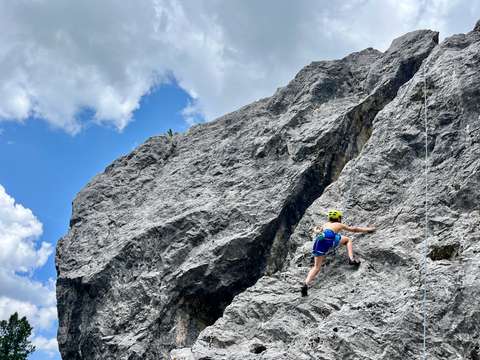
The area features 40 routes covering an incredible grade range, from 3 to 8c, making it suitable for any kind of climber. The climbing style is highly varied: you will find easy movement slabs with large holds as well as fiercely hard, endurance-based overhangs. The routes are spread across 3 mini-sectors that are all located very close to one another.
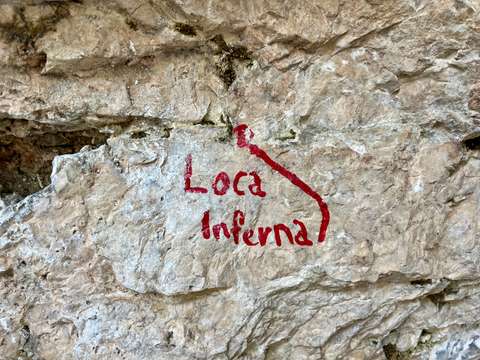
Some of the standout lines include Sultans of Swing, a stunning 8a running along an overhanging arête. Other interesting climbs are the easy routes in Area C, along with the steep Loca Inferna, Riss Kant, Drop in, and Shining.
The bolting is mostly reliable and features modern hardware, though a few older routes are still waiting to be rebolted.
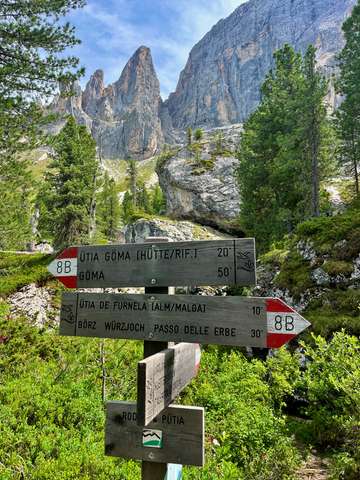
Sitting at an altitude of 2100 meters above sea level, Passo delle Erbe is an absolute pleasure to visit when the cities are sweltering. Summer and autumn are undeniably the best seasons for a climbing trip here. The comfort at the base of the routes varies depending on the specific block and position, but the overall area is very peaceful, free from traffic, and boasts a wonderfully pleasant 35-minute approach. This makes it an exceptional destination for a summer day of mountain climbing, and it is highly ideal for families.
For your rest days or post-climb relaxation, the nearby Malga "Munt de Fornela" is the perfect spot. You can enjoy typical local dishes, grab a drink, and rest on the deck chairs while children enjoy the playground among grazing animals and the imposing backdrop of Sass Putia. Additionally, the surrounding area offers world-class outdoor activities, such as hiking the famous Sass Putia loop (Giro del Sass Putia) or taking a short drive down into Val Badia to discover the rich Ladin culture and gastronomy.
🇮🇹
Passo delle Erbe è un settore di arrampicata unico, costituito da enormi blocchi di dolomia caduti dal soprastante e imponente Sass Putia. Questi blocchi si trovano in un ambiente alpino spettacolare e ancora incontaminato, a cavallo tra la Val Badia e la Val d'Isarco, in uno dei luoghi più belli delle Dolomiti.
L'area conta 40 vie che coprono un range di gradi pazzesco, dal 3 all’8c, rendendola una falesia adatta a qualsiasi climber. Lo stile di arrampicata è molto vario: si passa da placche semplici di movimento con grosse prese a strapiombi durissimi e di grande resistenza. Le vie sono sparse su 3 mini-settori, tutti situati molto vicini fra loro.
Tra le linee più belle spicca sicuramente Sultans of Swing, un 8a che corre lungo un estetico spigolo strapiombante. Altre vie interessanti sono le linee facili dell’Area C, oltre agli strapiombanti Loca Inferna, Riss Kant, Drop in e Shining.
La chiodatura è prevalentemente buona e realizzata con materiale moderno, salvo qualche vecchio tiro che necessita ancora di essere risanato.
Trovandosi a quota 2100 metri, arrampicare qui in estate quando in città fa caldissimo è un vero e proprio piacere! Le stagioni migliori per frequentare i blocchi sono proprio l’estate e l’autunno. La comodità alla base dei tiri varia molto in base al masso e alla posizione, ma nel complesso l'assoluta tranquillità, l'assenza di traffico, l'ambiente meraviglioso e il piacevolissimo avvicinamento (sebbene di 35 minuti) rendono questo luogo un posto eccezionalmente bello per una giornata estiva in montagna. È un'area ideale anche per le famiglie.
Per i giorni di riposo o il post-arrampicata, la vicina Malga "Munt de Fornela" è il luogo ideale. Qui è possibile mangiare piatti tipici, bere e rilassarsi sulle sdraio, mentre i bambini si divertono nel parco giochi ammirando gli animali al pascolo e la mole del Sas de Putia. Inoltre, i dintorni offrono escursioni di livello mondiale, come il celebre giro del Sass Putia, o la possibilità di scendere in Val Badia per esplorare la cultura e l'enogastronomia ladina.