🚶♂️ 2' - ⛰️ 1225 MSL - 🧭 S / W
☀️ All day, some parts are shaded in the morning / Tutto il giorno, alcune parti sono in ombra durante la mattina
🇬🇧/🇺🇸
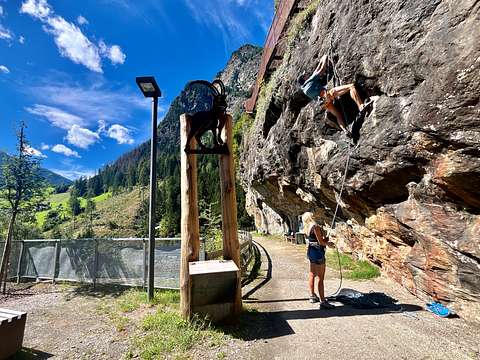
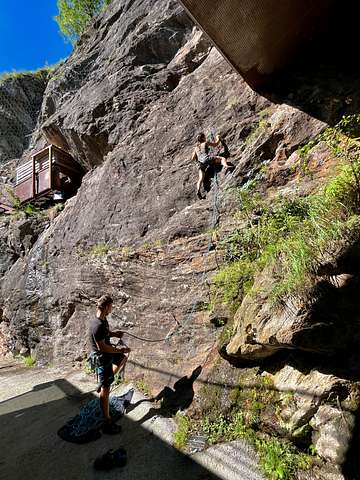
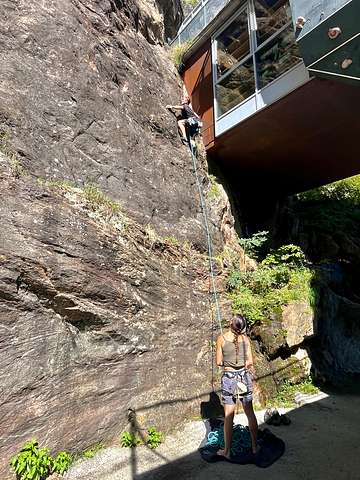
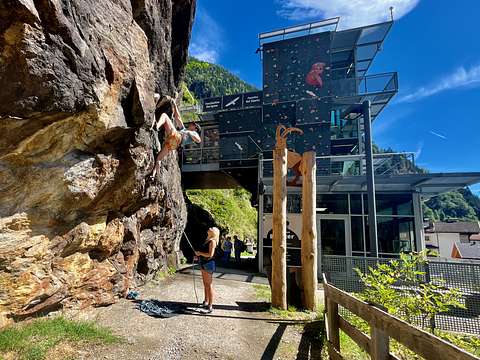
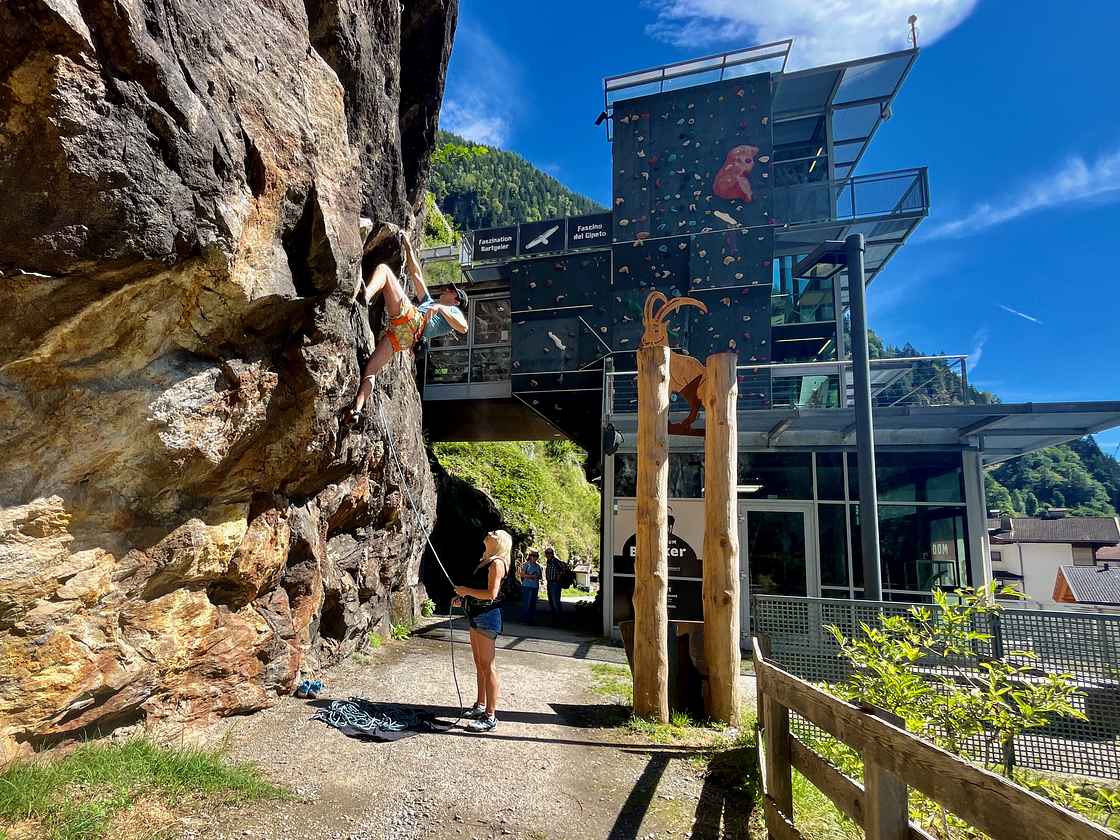
Moso is a unique urban crag located in the picturesque Val Passiria. Its most distinctive feature is its integration with a WWII-era bunker built by the Italian army, situated right behind the Bunker Mooseum. The rock is high-quality gneiss, offering 26 routes ranging from 3 to 8b.
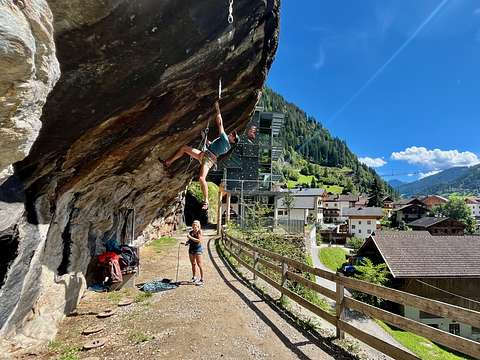
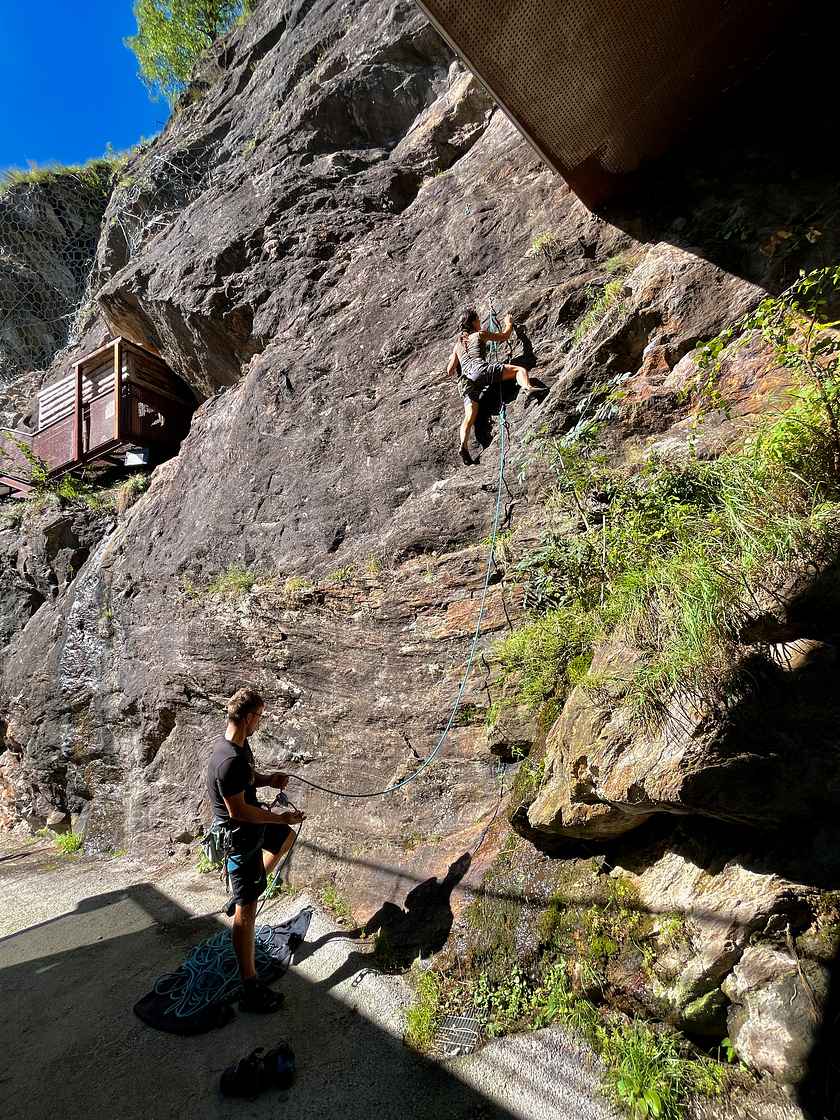
The climbing style is highly varied: you will find short, bouldery overhangs as well as long, technical lines on vertical walls. There are also interesting traverse pitches equipped with fixed quickdraws (always check their condition before use!). While primarily a local spot, it features true gems like the spectacular "Thors Hammer" traverse and the long slab of "Tatzelwurm." An artificial climbing wall is also present on-site, though it is currently closed to the public.
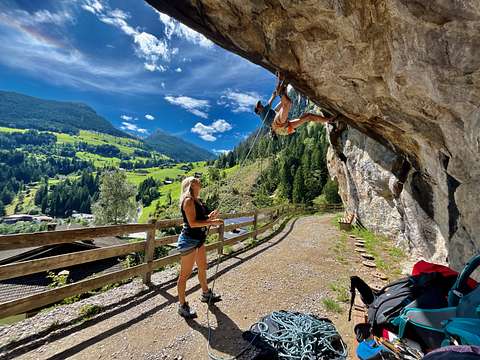
Exposure is mostly South/West, making it a perfect winter destination as the wall catches the sun all day. A small overhanging sector faces West, providing some shade in the morning. The bolting is new and very safe.
With an approach of only 80 meters and a flat base equipped with benches, it is an excellent choice for families.
After climbing, a visit to the Bunker Mooseum is highly recommended; it features exhibits on geology, war history, and local fauna. On top of the cliffs, there is a meadow where you can often spot ibexes and rock partridges. For a nature break, don't miss the nearby Stuller Waterfalls (one of the highest in Europe) or a stroll through the traditional alpine villages to taste local speck and knödel.
🇮🇹
Moso è una falesia cittadina davvero particolare, situata nell'omonimo paese nella bellissima Val Passiria. La sua caratteristica principale è l'integrazione con un bunker costruito dall’esercito italiano durante la guerra, situato proprio alle spalle del Bunker Mooseum. La roccia è uno gneiss di qualità e offre 26 vie con difficoltà dal 3 all'8b.
Lo stile di arrampicata è molto vario: si passa da tiri corti e boulderosi in forte strapiombo a lunghe linee tecniche su parete verticale. Sono presenti anche alcuni traversi attrezzati con rinvii fissi (da controllare sempre prima dell'uso!). Sebbene sia una falesia frequentata soprattutto da locals, offre perle come lo spettacolare traverso di "Thors Hammer" e la lunga placca di "Tatzelwurm". È presente anche un muro artificiale che però risulta attualmente chiuso al pubblico.
L'esposizione è prevalentemente a Sud/Ovest, il che la rende un'ottima meta invernale grazie al sole presente tutto il giorno. Un piccolo settore strapiombante rivolto a Ovest garantisce invece alcune ore di ombra al mattino. La chiodatura è nuova e molto sicura.
L’avvicinamento di soli 80 metri e la base comoda con panchine la rendono una destinazione perfetta per le famiglie.
Terminata l'arrampicata, consigliamo una visita al Bunker Mooseum, che spazia dalla geologia ai reperti bellici fino alla fauna locale. Sopra le pareti si trova un prato dove è possibile avvistare stambecchi e coturnici. Per una giornata di relax, meritano una visita le vicine Cascate di Stuller o una sosta nelle trattorie della zona per gustare i piatti tipici della Val Passiria come canederli e speck.
🇬🇧/🇺🇸
The Moso crag is intrinsically linked to the bunker built by the Italian army between the two World Wars to defend the border against potential invasions through the Passo Rombo. This fortification has now been converted into a museum and is well worth a visit, both for its historical-cultural interest and for the striking architecture and the exhibition path created within its walls.
Routes have been equipped by the AVS (Alpenverein Südtirol), teams from the Val Venosta, M.Huber and M.Villgratter.
🇮🇹
La falesia di Moso è integrata con il bunker costruito dall’esercito italiano a cavallo tra le due guerre per difendere il confine da possibili invasioni attraverso il Passo del Rombo. Questa fortificazione è oggi adibita a museo e merita sicuramente una visita sia per l’interesse storico-culturale, sia per la bellezza della struttura e del percorso espositivo realizzato al suo interno.
Le vie sono state chiodate dall’AVS (Alpenverein Südtirol), team della Val Venosta, M.Huber e M.Villgratter.