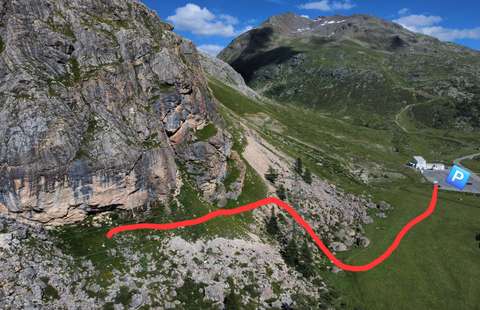
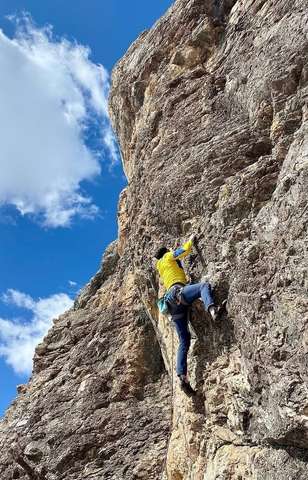
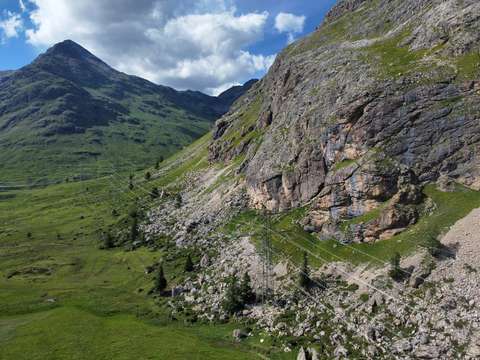
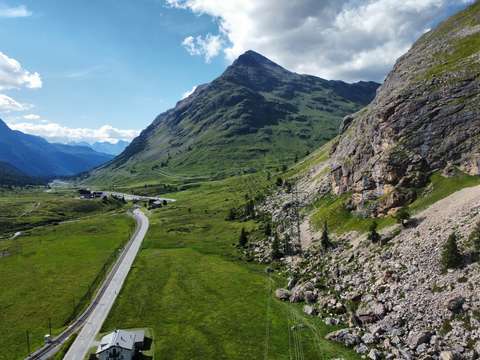
Lagalb is an outstanding summer climbing destination, especially during the hottest months of the year. Thanks to its elevation of around 2,000 metres and its morning shade, the crag stays pleasantly cool while temperatures in the valley can already be uncomfortably high. The walls receive the sun later in the day, allowing climbers to enjoy excellent friction and comfortable conditions throughout the morning.
The climbing is predominantly athletic, with a wide range of grades from moderate routes to demanding, high-end challenges. This variety makes the crag attractive to both experienced climbers looking for sustained pitches and those seeking enjoyable mid-grade climbing in a cool alpine setting.
Even in the middle of August, it is not unusual to find comfortable temperatures in the shade, often around 18°C when a light breeze is present. On cloudy or windy days, conditions can feel even cooler, making Lagalb one of the most pleasant places to climb during summer heatwaves. Of course, exceptionally hot days can still affect the area, but compared with lower-elevation crags, the cooler climate and frequent airflow provide a significant advantage for those looking to make the most of long summer mornings.
The Lagalb climbing area, located beneath Piz Alv, remained surprisingly overlooked for many years. The first routes were established during the early 1960s by local mountain guides and the Swiss military, after which development came almost to a standstill. A handful of classic climbs, including *Ruedi's Dream* and *Wenk Riss*, appeared in the 1970s, but the limestone cliffs were not truly rediscovered until 1993. Within a single season, A. and M. Stupan, C. Raillard, Ch. Seeger and several other climbers equipped more than twenty routes, covering everything from beginner-friendly lines to demanding testpieces. About ten years later, local Engadin climbers expanded the crag with another twenty-five routes, creating sectors such as Paraid Grischa, Crap Nair and Steinbockweg between 2002 and 2005. The later addition of Paraid Cotschna further increased the variety of climbing available.
Today, Lagalb is regarded as one of the largest and most diverse sport climbing venues in the Engadin. Climbers will find everything from low-angle technical slabs to powerful overhangs. Scattered boulders beside the meadow also provide opportunities for bouldering and make the area pleasant for families. Easier beginner routes are located in the Bergsteigerschule sector, around 25 minutes above the main crag.
Although the cliffs face mainly south, their elevation of about 2,000 metres keeps temperatures comfortable throughout summer. The exposed position also allows exceptionally long climbing days, with the sun reaching the sector well into the evening. Most routes can be climbed with a 60 m rope, although a few require a two-stage rappel, so route descriptions should always be checked in advance. The entire crag was re-equipped in 2004 with modern hardware.